
Case Study: Oman - Pipeline Flow assurance 2023-2025
ThermoSonic Technology: Revolutionizing Heavy Oil Flow Assurance and Production Optimization
DOI: 10.2118/229978-MS
Challenge
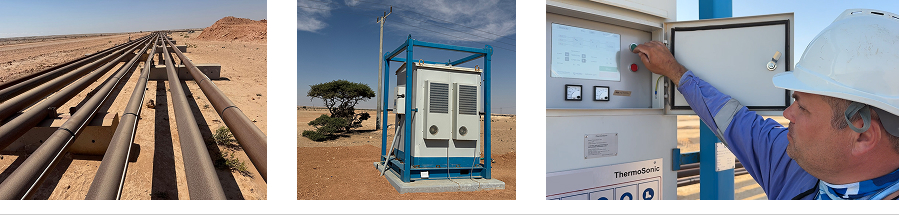
Heavy oil wells in southern Oman experienced severe flow assurance issues during winter. Low ambient temperatures increased oil viscosity, leading to elevated flowline backpressure, frequent shutdowns, and significant production deferment.
Solution
ThermoSonic™ technology was deployed along surface flowlines to enhance fluid mobility through combined physical effects, without the use of chemicals or high-energy heating methods.
Result
- Reduction of flowline backpressure by 20–45%
- Restoration of production in previously non-flowing wells
- Up to 35% increase in production in optimized wells
- Stable, continuous operation during winter conditions
- Replication of “summer-like” flow behavior year-round
Supporting Documents (Upon Request)
Customs & Export Documentation · SPE-229978-MS Technical Paper
Case Study: Kuwait - Tank Cleaning, Kuwait National Petroleum Company 2019-2020
Challenge
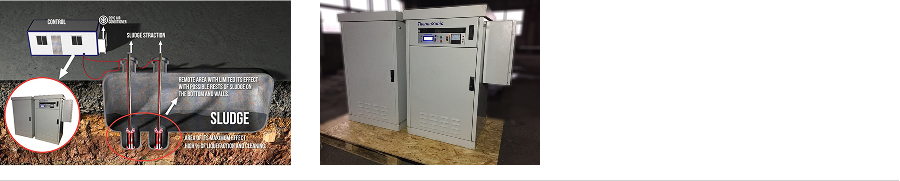
Severe sludge accumulation in an HCD vessel prevented normal pumping operations.
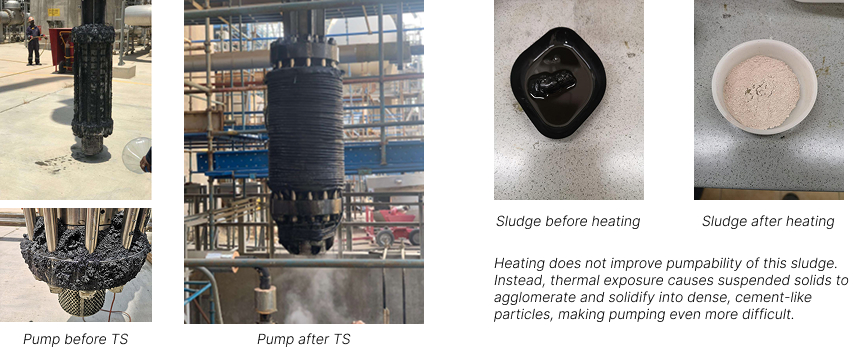
The sludge consisted of a low-viscosity liquid phase with a high concentration of fine solid particles, forming a complex medium that was effectively non-pumpable. Conventional heating methods were not viable, as thermal treatment led to particle agglomeration and coking, preventing any effective reduction in viscosity and making pumping impossible using conventional methods.
Solution
ThermoSonic™ technology was deployed directly inside the vessel via inductive elements installed on pumps, enabling in-situ liquefaction of sludge through combined acoustic and electromagnetic effects, with heating acting as a secondary mechanism.
Result
- Liquefaction and removal of approximately 300 m³ of sludge (vs. 25 m³ initially planned)
- Sludge removal exceeding the specified target residual level (~15%)
- Successful sludge processing in conditions where conventional heating fails due to catalyst coking
- Sludge processing speed up to 10× faster than conventional heating
- Restoration of normal vessel operability
- Effective cleaning achieved within the planned operational window
Supporting Documents (Upon Request)
Project Completion Report · KNPC Letter of Appreciation · Customs & Export Documentation
Case Study: High-Viscosity Well, Deistvie Oil Company, Russia 2018
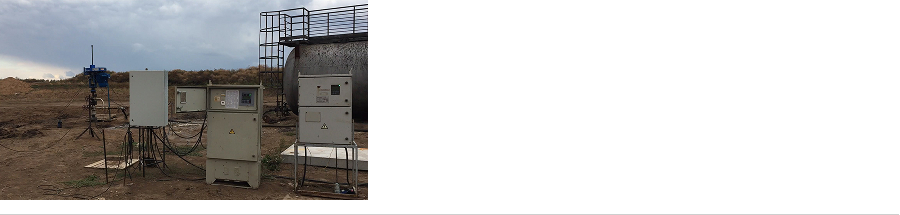
Challenge
A high-viscosity oil well exhibited no-flow conditions during production due to rapid loss of fluid mobility as temperature and pressure declined during lift.
Despite relatively moderate reservoir conditions, the oil (viscosity >30,000 cP at surface conditions) transitioned into a non-flowable state, making continuous production to surface impossible. Conventional heating cable solutions provided only marginal improvement and were insufficient to maintain stable flow.
Solution
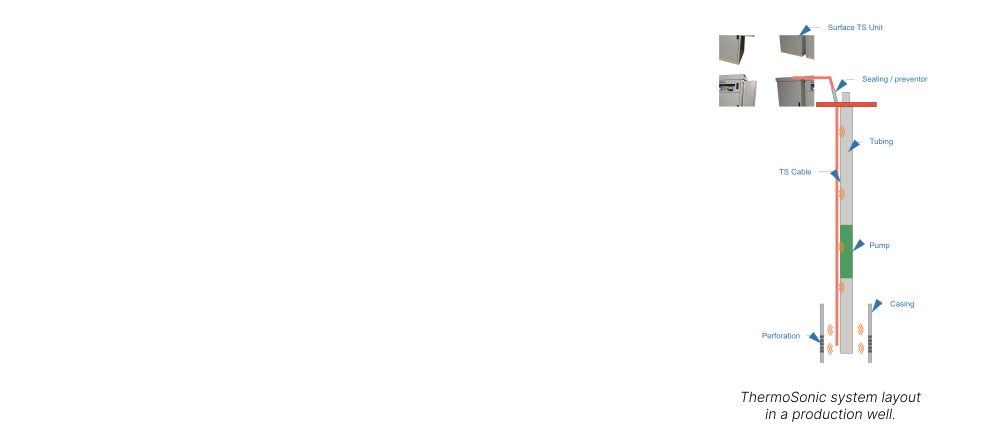
ThermoSonic™ technology was applied to sustain fluid mobility during lift, preventing the oil from transitioning into a non-flowable state under dynamic pressure and temperature conditions.
Result
- Transition from no-flow to stable continuous production
- Production increase to 5–6 m³/day (vs. 2–2.5 m³/day with heating cable)
- Up to 3× higher output compared to heating cable
- 25–40% lower power consumption vs. thermal methods
- Sustained flow under dynamic pressure and temperature conditions